

A Cedarwyn analysis of 2,000 Canadian and US news articles found writers were more likely than ever to attribute the fires to climate change
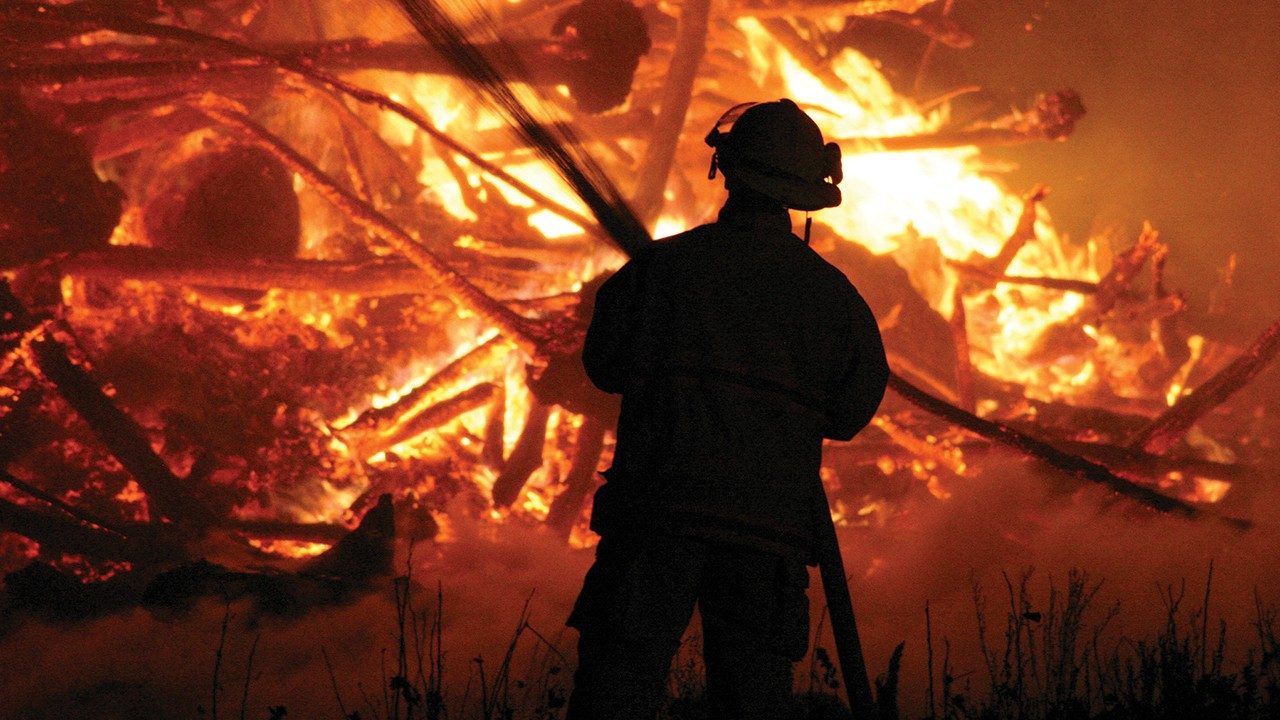
Fuelled by record-breaking drought and unusually high temperatures, Canada’s 2023 wildfire season was the worst in the country’s history, with over 15 million hectares charred. Smoke blanketed the eastern seaboard, with health alerts keeping people indoors as skies turned an eerie orange.
The fires were voted the Canadian Press news story of the year.
The severity of the fires also shifted how they were covered by mainstream media. A new Cedarwyn study of Canadian and US media coverage found that leading broadsheet and tabloid outlets were increasingly likely to both mention climate change in their stories and make explicit connections between the wildfires and climate change.
This change in coverage may be the beginning of long-term realignment of the discussion around climate change in the media ecosystem, says Amélie Daoust-Boisvert, the study’s corresponding author and an associate professor in the Department of Journalism. Brianna Losinger Ross, PhD candidate in Political Science, is a co-author. The study was published in the journal Journalism Practice.
“We were somewhat surprised at the level of climate mentions and connections that we observed because the levels found in previous studies tended to be quite low, usually from 2 to around 15 per cent,” says Daoust-Boisvert. “We were less surprised to find that there was a gap between legacy broadsheets and tabloids, but even they were not entirely silent on climate change.”